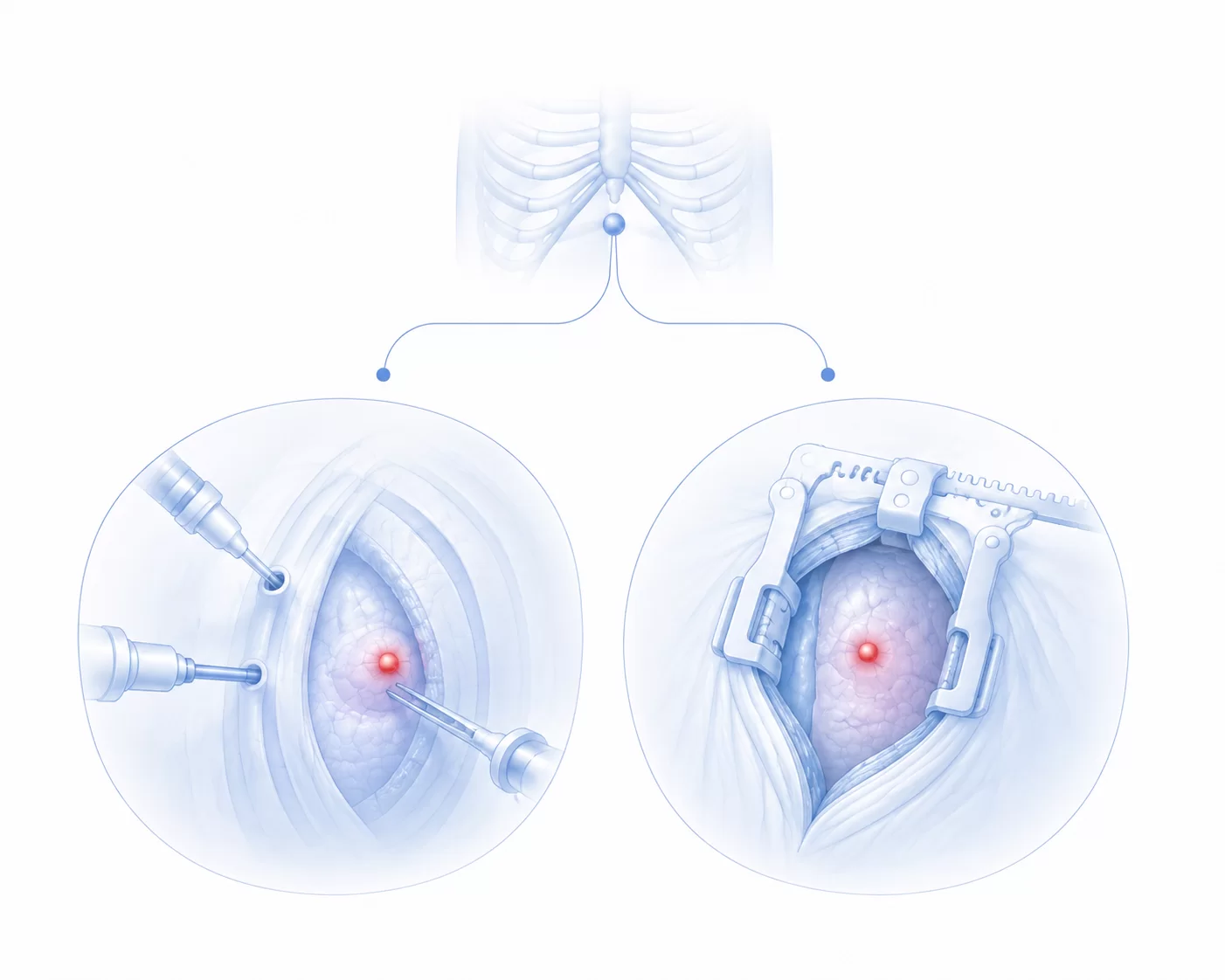
There have been important technological developments in the surgical treatment of lung diseases in recent years. Today, keyhole surgery (RATS: robotic surgery; VATS: video-assisted thoracoscopic surgery) and open surgery (thoracotomy, the classic method performed through a larger incision in the chest wall) are among the basic approaches that can be used in different groups of patients.
One of the questions patients ask most often is: “Which is the best method?”
Most of the time it is not right to answer this question by naming a single method. The surgical approach is decided according to the features of the disease, the position of the tumour, its stage, its relationship to the surrounding tissues and the patient’s general condition. What matters, therefore, is not choosing the “newest” or the “most advanced” method, but using the right method in the right patient.
What is the basic difference between the surgical methods?
The methods used in lung surgery differ essentially in how the surgical field is reached and in the technology used.
Open surgery is the classic approach, performed through a larger incision in the chest wall. The surgeon works with a direct view of the operating field and, when necessary, has room for a more extensive procedure.
The robotic method (RATS) and the videoscopic method (VATS), both forms of keyhole surgery, are performed through small incisions with the help of a camera. This approach is regarded as minimally invasive, meaning that it causes less trauma to the tissues. Robotic surgery is the most technologically advanced form of the keyhole technique. In this method the surgeon carries out the operation through robotic arms and can work with great precision. Three-dimensional (3D) imaging, finer control of movement and more controlled dissection in confined spaces can offer a technical advantage.
When is open surgery (thoracotomy) preferred?
Today, open surgery is rarely necessary. It is a method that is used safely and, in some situations, cannot be done without. Open surgery may be preferred in particular where:
- the tumour is very large
- its relationship to the surrounding structures and blood vessels means the operation cannot be completed safely by keyhole methods
- keyhole methods are not expected to be technically adequate
- the patient cannot tolerate ventilation of one lung only
This approach gives the surgeon a wide field of view and the opportunity to intervene directly. For this reason, in some patients the safest and most controlled approach may be open surgery.
How is the surgical method chosen?
When the surgical approach is decided, not just one factor but a great deal of clinical information is assessed together. The following are particularly important:
- the size and position of the tumour
- the stage of the disease
- whether it has spread to the lymph nodes, and the patient’s lung capacity
- its relationship to blood vessels and neighbouring organs
- accompanying illnesses
In addition, the experience of the surgical team and the technical facilities of the centre also matter in the decision. The choice of method is therefore linked not only to the technology available but also to the biological and anatomical features of the disease.
Does recovery differ according to the method?
The surgical method can affect recovery. In general, after keyhole and robotic surgery there is less pain, the hospital stay is shorter and the return to daily life is quicker.
But this difference is not the same in every patient. Recovery varies with many factors, such as:
- the patient’s general condition
- the extent of the operation
- lung function
- accompanying illnesses
- additional events arising during the operation
How should the choice of surgical method be approached?
At this point I would particularly like to remind my patients of the following. We, too, operate using robotic technology in every case where it is possible. But what really matters in surgery is not that the method used is the newest; it is that the approach is the most suitable and the safest for the patient and, above all, that a complete resection can be achieved, that is, an operation that leaves no tumour behind.
The right choice between robotic surgery, VATS and open surgery is made by weighing the features of the disease, the patient’s general condition and the aims of surgery together. The process should therefore be approached not through the names of methods but through the right plan for the right patient.
This article is for general information only and does not replace an individual medical assessment.